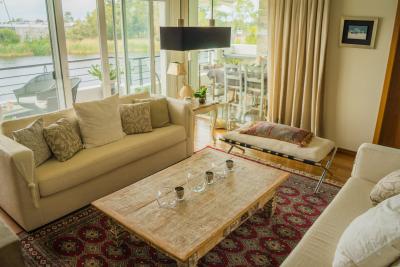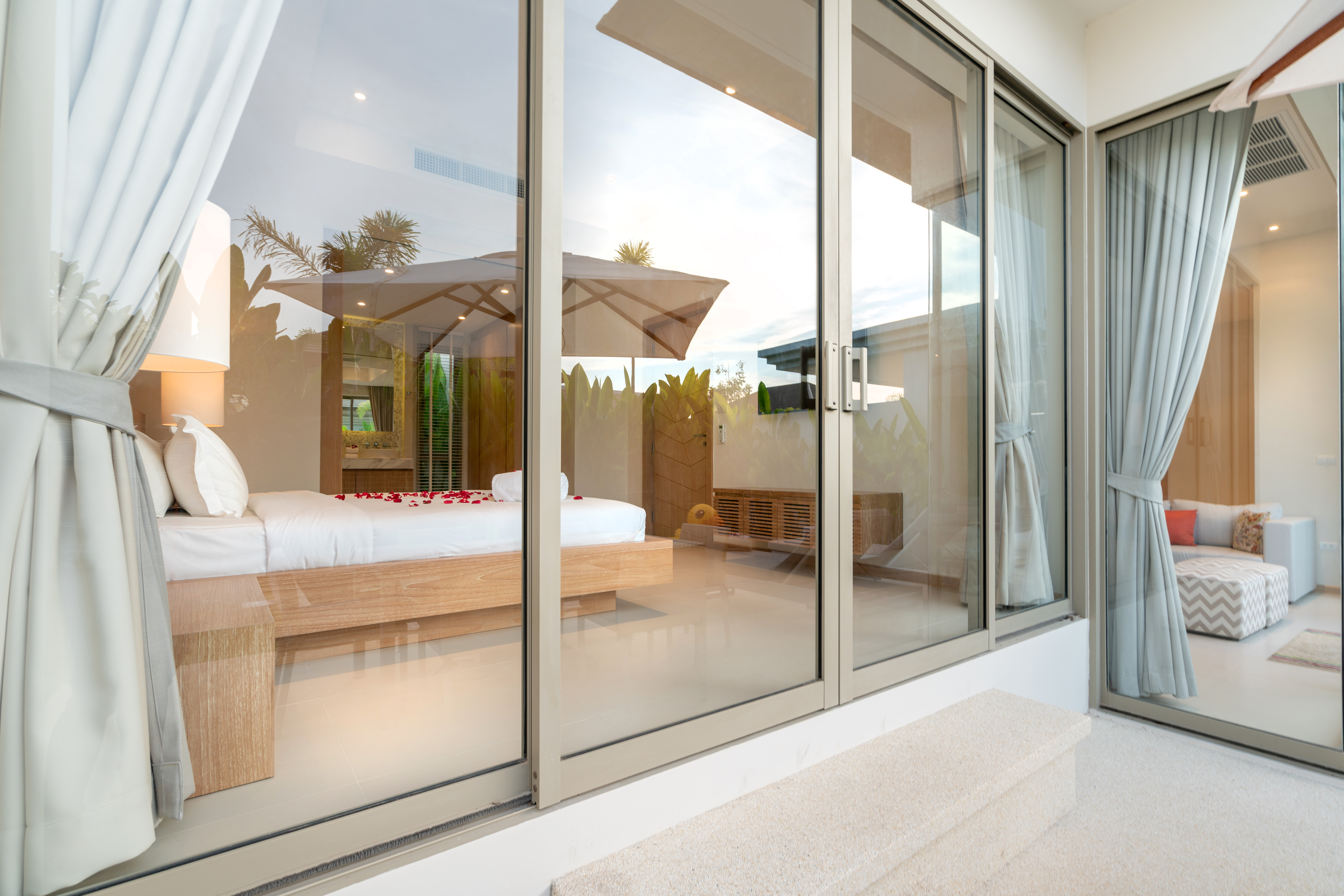
Sliding glass doors flood rooms with natural light, give you easy access to the outdoors, and make the space feel more open. But they also present a challenge: how do you cover such a large, frequently used opening in a way that’s practical and looks good at the same time?
The right window treatments for sliding glass doors can make the difference between a room that feels unfinished and one that is comfortable and functional year-round. In this guide, we walk you through options for every style and budget, plus practical advice to help you make the best choice for your home.
For a closer look at material performance and design basics, you can also explore our comprehensive drapery style guide.
Curtains for sliding glass doors: Common challenges
If you’ve struggled to find the right sliding glass door curtains, you’re not alone. These doors are larger than most windows, used daily, and often need to handle changing light, temperature, and privacy needs throughout the day.
Here are the most common challenges to keep in mind when shopping:
-
Strong hardware – Wide openings require sturdy rods or tracks that won’t bow or snag.
-
Daily access – Choose curtains and drapes that slide smoothly so the doorway stays easy to use.
-
Light and privacy balance – You may want bright daylight during the day but complete privacy at night.
-
Temperature control – Glass can lose heat in winter and let it in during summer. The right window treatment not only helps regulate temperature, but will also lower your energy bill.
-
Busy households – Pets and kids can be tough on fabrics and hardware, so durability and easy cleaning are key.
Addressing these from the start will help you make a choice that looks good, works well, and lasts for years without frustration.
Best window treatments for sliding glass doors
When choosing the best curtains for sliding glass doors, consider your priorities first. Some options are better for everyday use, some for insulation, and others for pet owners. From timeless drapery to modern panel systems, there are countless sliding door curtain ideas that can make your space more unique while keeping it practical.
1. Classic vertical blinds
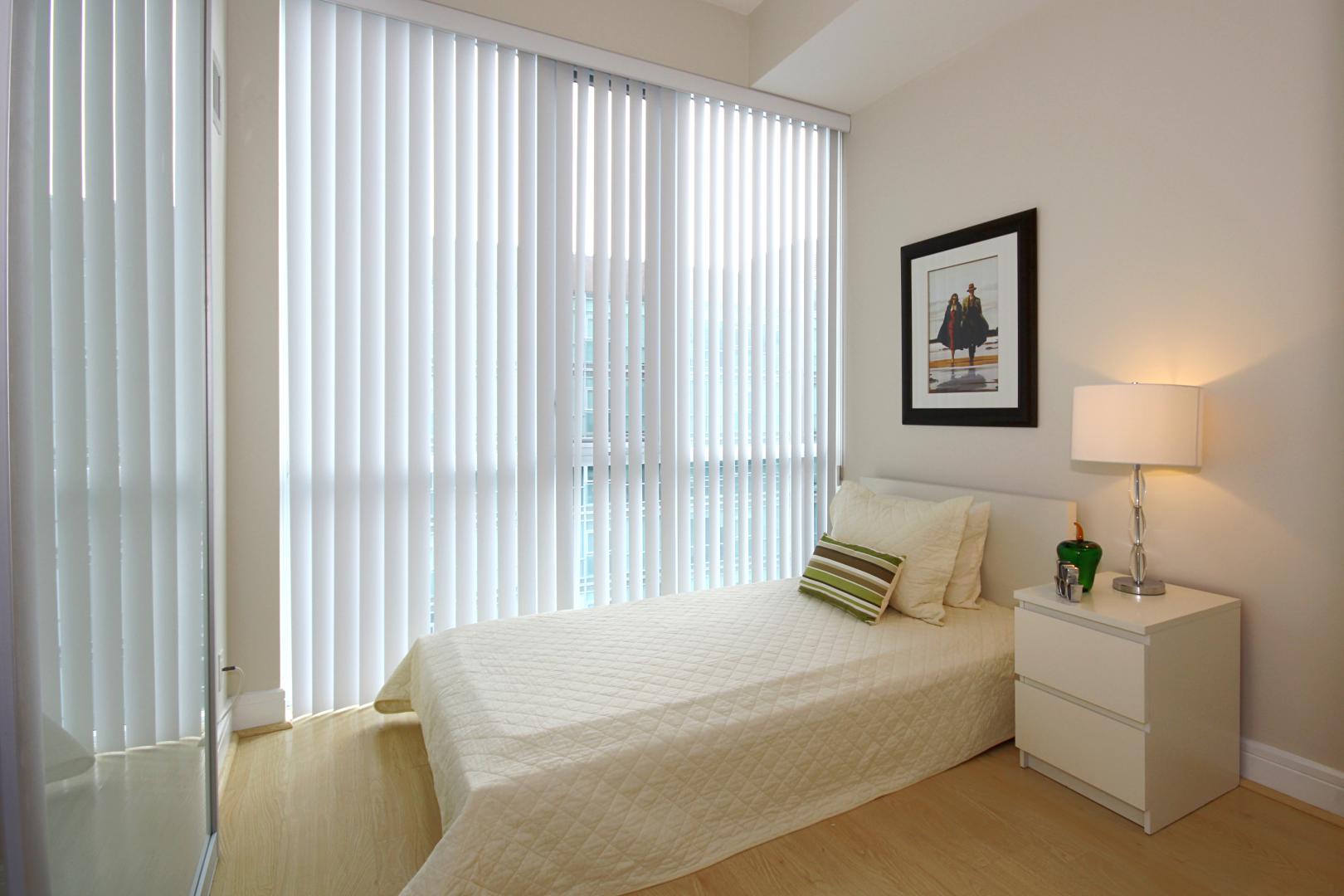
Vertical blinds are an interior design staple. They are simple, functional, and budget-friendly. The long vertical slats hang from a headrail and can be tilted to control light or fully drawn to one side for clear access to the door.
Pros:
-
Affordable and widely available
-
Easy to operate and maintain
-
Works well for rental properties or quick updates
Cons:
-
Can feel less cozy than fabric curtains
-
Slats may sway in drafts or with frequent use
-
Somewhat limited privacy
Best for: Budget-conscious updates and rental properties where easy solutions are a priority.
2. Sliding panel track systems
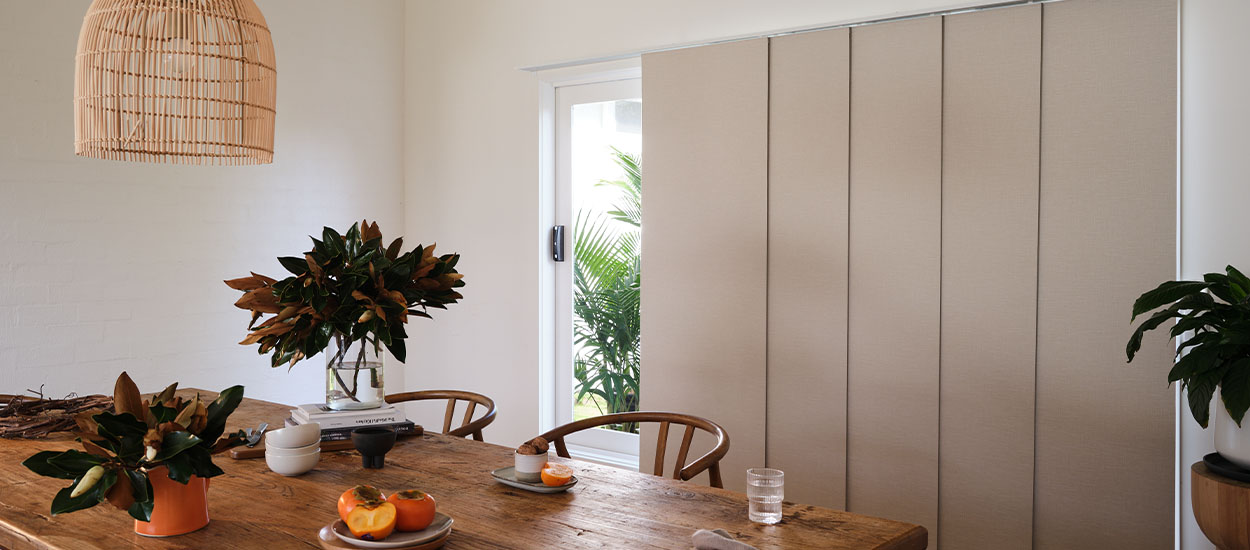
Panel tracks are one of the most popular modern window treatments for sliding doors. They’re made up of large, flat fabric panels that slide smoothly along a track, stacking neatly to one side when open. The clean lines and variety of materials make them a favorite for contemporary interiors.
Pros:
-
Sleek, minimal look that suits modern spaces
-
Available in a range of fabrics, weaves, and colors
-
Easy to slide open and closed
Cons:
-
May not block light fully
-
May need custom sizing for wider doors
Best for: Sleek, modern sliding door curtains that fit minimalist and contemporary interiors.
3. Custom drapery for sliding glass doors
Custom sliding door drapes offer the most flexibility. You choose the exact fabric, lining, length, and style to match your needs. For instance, for bedrooms or media rooms, consider blackout curtains for sliding glass doors to block out sunlight completely and improve energy efficiency. Experts at Better Homes & Gardens also suggest adding glare-controlling window film or other specialized window treatments.

Pros:
-
Made to fit your windows perfectly
-
Wide selection of fabrics and linings for privacy, insulation, or blackout
-
Complement existing décor exactly
Cons:
-
More costly than ready-made options
-
Can take longer to be made
Best for: Homeowners who want a unique, long-term solution that perfectly matches their décor.
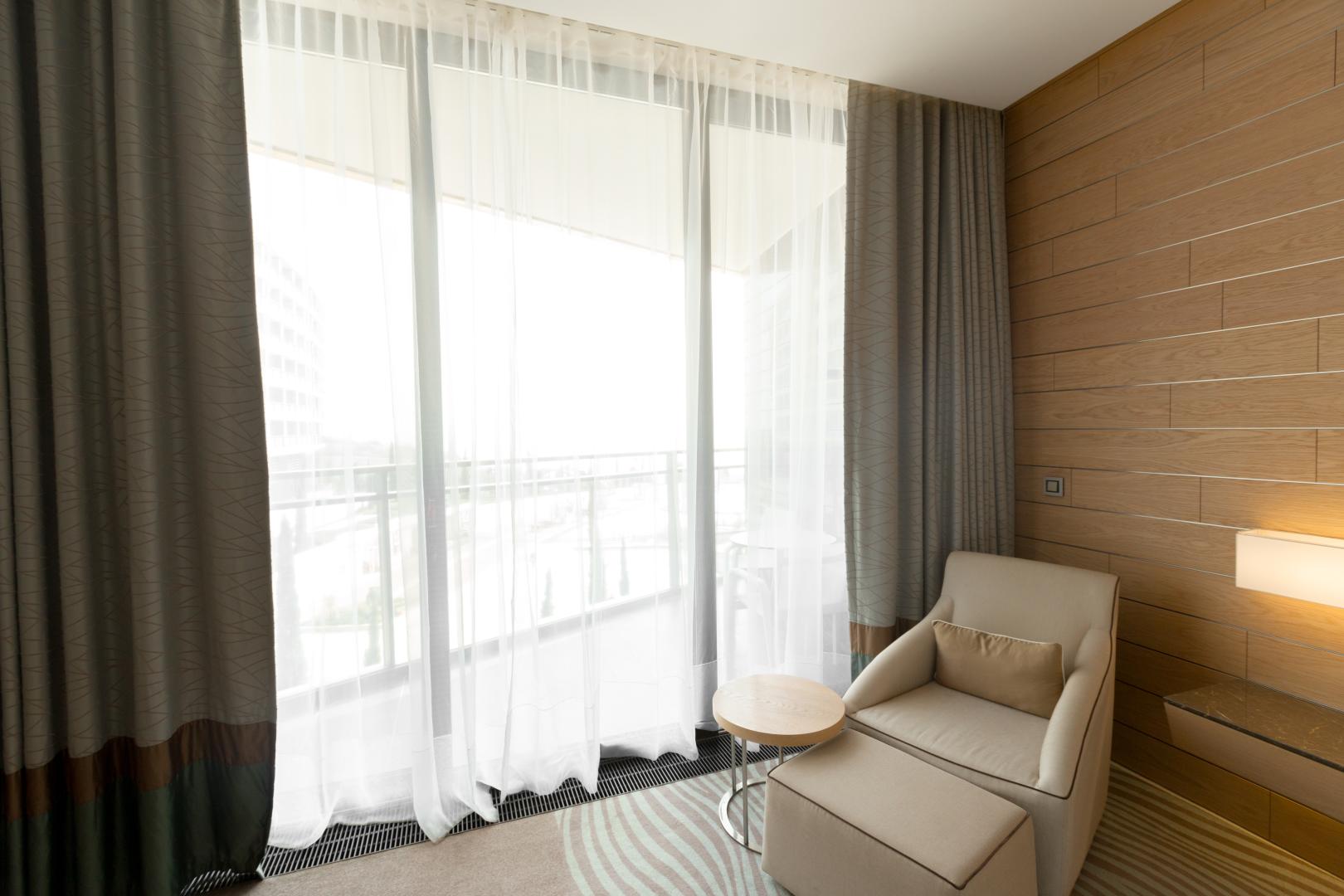
4. Layered treatments: Sheers + drapes
You don’t have to choose one or the other. Combine the soft, light-filtering qualities of sheer curtains with the privacy and insulation of heavier drapes. During the day, gentle light can enter while maintaining some privacy. In the evening, draw the drapes completely to block out the light.
Pros:
-
Get both daylight softness and nighttime privacy
-
Improves insulation and energy efficiency
-
Adds dimension to the room
Cons:
-
More hardware and wall space are needed
-
More expensive compared to a single-layer treatment
Best for: Living rooms, dining rooms, and bedrooms where you want both light control and a layered, designer look.
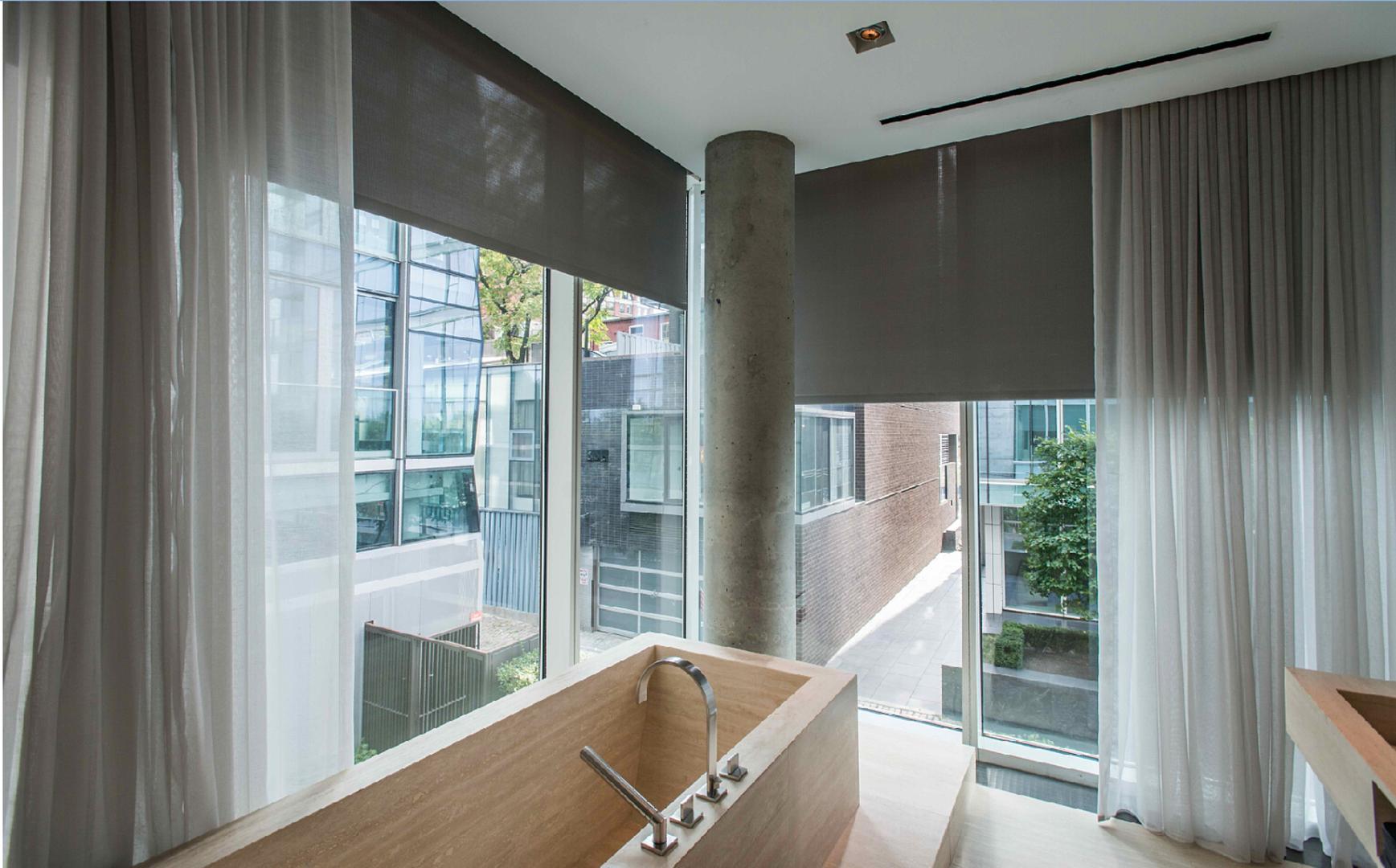
5. Motorized sliding glass door curtains
Motorized systems use a remote, wall switch, or smart-home integration to open and close curtains or panels with ease. They’re ideal for large, heavy treatments or for doors that are difficult to reach, as you won’t even need to get up from the couch to close your curtains. It also means they don’t need any cords, which can make it safer for children and homes with pets.
Pros:
-
Convenient, push-button, or voice control
-
Cord-free design for safety and a minimalist design
-
Works well for large windows and heavy fabrics
Cons:
-
Higher upfront cost
-
May require professional installation or electrical work
Best for: High-use sliding doors, accessibility needs, and homeowners looking for the ultimate comfort.
Comparing window treatments for sliding doors
It can be hard to decide which window treatment will best meet your needs. If you’re still not sure, use this guide to quickly narrow down your favorites.
|
Treatment Type |
Privacy |
Light Control |
Insulation |
Ease of Use |
Style |
Budget Level |
|
Vertical Blinds |
Good |
Adjustable tilt for brightness |
Minimal temperature control |
Very easy |
Minimalist and simple |
$ |
|
Sliding Panels |
Good |
Soft filtered or blackout |
Good thermal performance |
Easy glide operation |
Modern |
$$ |
|
Custom Drapery |
Depends on the model |
Sheer to blackout |
Excellent insulation possible |
Moderate effort to draw |
Unique design, made specifically for you |
$$$ |
|
Layered |
Excellent |
Sheer-to-blackout flexibility |
High energy efficiency |
Moderate, two-layer use |
Flexible, various design possibilities |
$$$ |
|
Motorized |
Excellent |
Customizable, preset control |
High energy efficiency |
Effortless, push-button |
Varies with fabric choice |
$$$$ |
Design and style tips for sliding door curtains
Now, you, hopefully, have the type of window treatment you want to choose in mind. Let’s move on with some more tips for finding the perfect solution for your glass doors.
-
Choose fabric weight wisely – Lightweight sheers let in soft light; heavier fabrics with lining provide privacy and insulation. Explore our guide on the best fabrics for curtains for inspiration.
-
Coordinate with your room’s palette – Match or complement your wall colors, flooring, and furnishings for a cohesive look.
-
Select durable hardware – Choose a sturdy curtain rod for a sliding glass door, especially if you want to opt for heavier drapery.
-
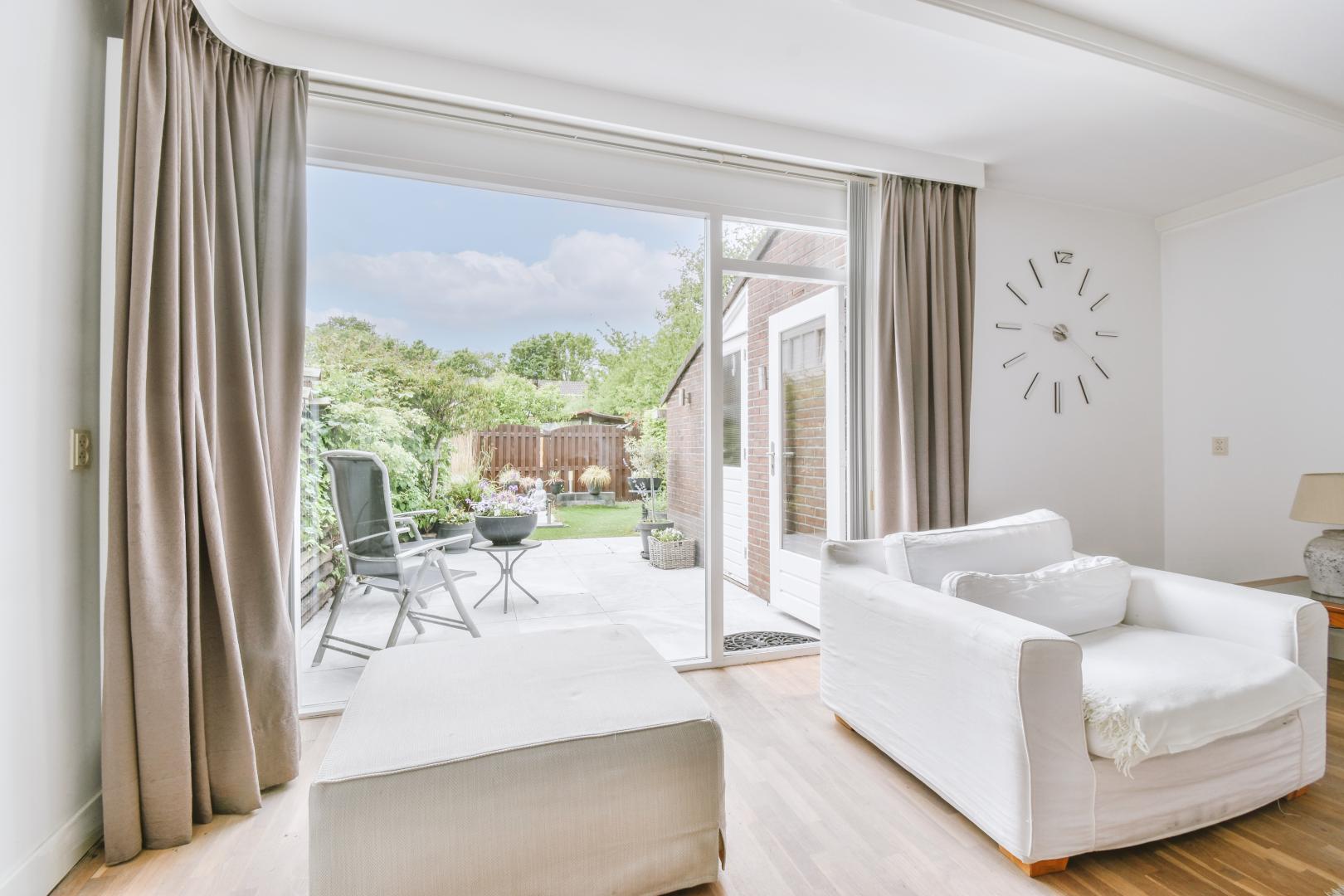
Go high and wide – One of the tips suggested by experts at Architectural Digest is to hang curtains above the frame, and extend them beyond the door’s width. This makes the opening feel larger and more elegant.
With your design choices set, the next step is to make sure your window treatments are installed correctly.
Installing and mounting sliding door curtains
For your curtains and drapes to operate smoothly and last for years, proper installation is key. The right mounting method can also improve light control and prevent unnecessary wear on fabric and hardware.
-
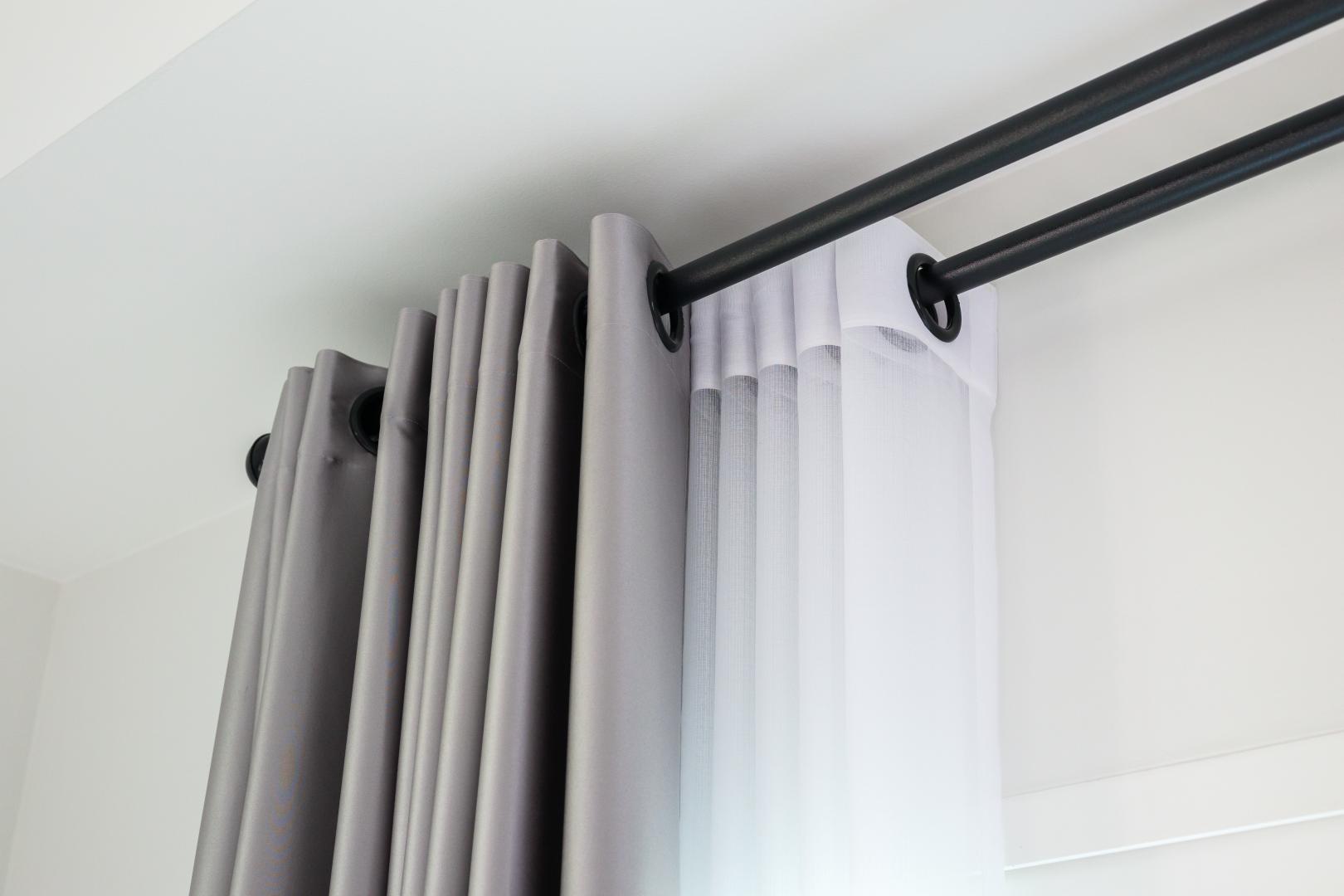
Choose between wall mount vs. ceiling mount – Wall mounts are easier to install and work well in most spaces, while ceiling mounts create a taller, more dramatic appearance and help in rooms with limited wall space above the door.
-
Avoid door obstruction – Leave enough clearance so curtains or panels open fully without blocking the doorway. Plan for stacking space when the curtain or drape is open.
-
Measure for accuracy – Measure width, height, and desired overlap carefully to avoid light gaps. Double-check measurements before ordering.
-
Select sturdy hardware – It’s better to invest in strong rods or tracks designed to support the weight and width of sliding door curtains, especially for heavy or lined fabrics.
With the right installation approach, your curtains will not only look beautiful but also function smoothly.
How to maintain window treatments for sliding doors
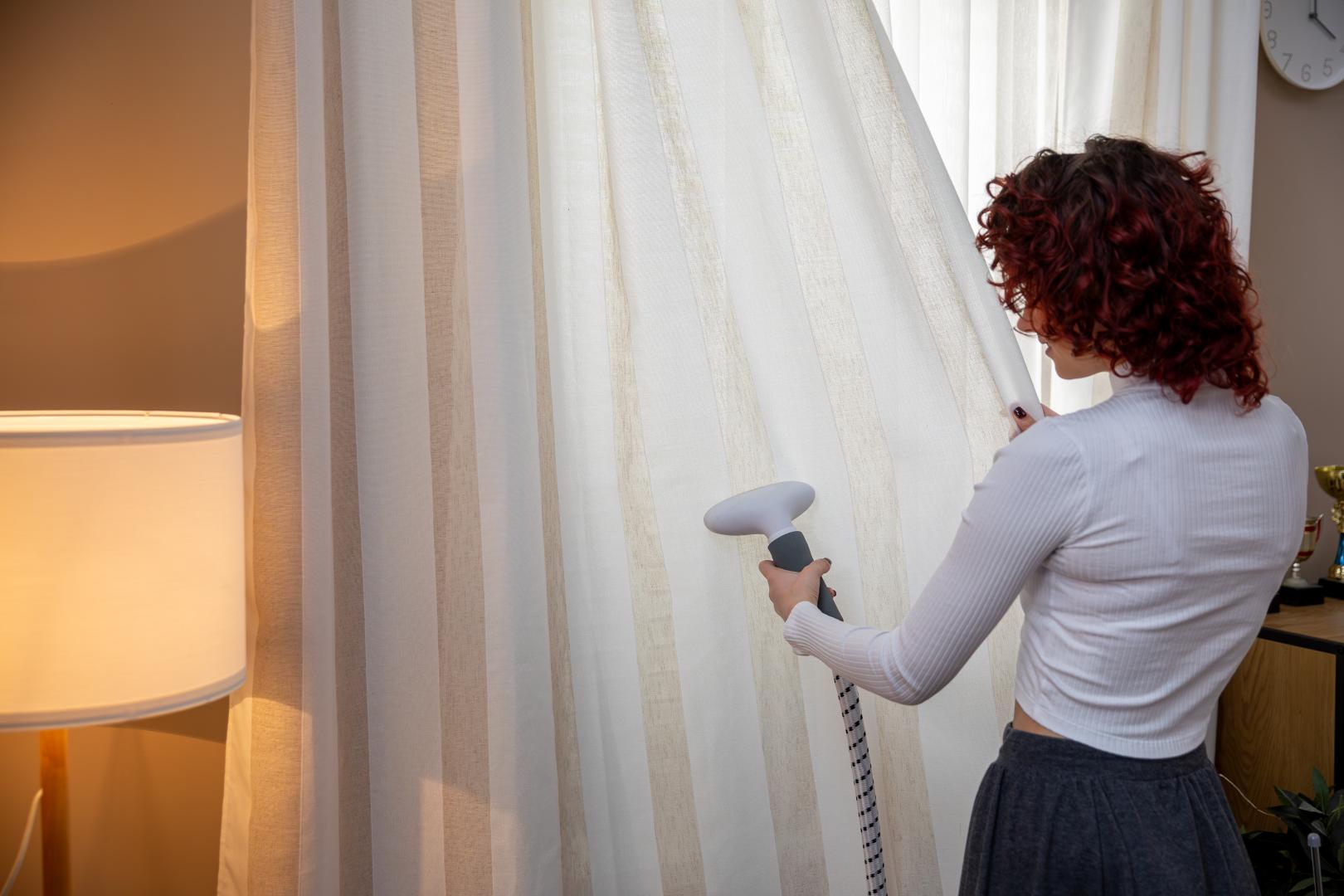
Well-maintained curtains and drapes not only look better but also last longer, especially for doors that are being used often. We’ve compiled a short list of cleaning tips and tricks:
-
Vacuum or dust regularly – Use a soft brush attachment or handheld duster to remove dust and prevent allergens from settling into fabrics.
-
Spot clean stains – Treat spills and marks right away with a mild detergent or fabric-specific cleaner to avoid permanent discoloration.
-
Wash or dry-clean as recommended – Follow the manufacturer’s care instructions to maintain fabric quality and avoid shrinkage.
-
Check and lubricate tracks – For sliding panels or motorized systems, keep tracks clean and lightly lubricated for smooth operation.
Sliding glass door curtains for different budgets
No matter your budget, there’s a window treatment option for your sliding glass doors. From simple, functional choices to premium custom solutions, the right selection depends on your needs and priorities.
-
Budget-friendly options – Vertical blinds and ready-made sliding door curtains offer good privacy and light control at a lower cost.
-
Mid-range solutions – Sliding panels and semi-custom drapes provide more style flexibility and better insulation without breaking the bank.
-
Premium choices – Fully custom drapery, layered treatments, and motorized systems deliver the best in aesthetics, convenience, and performance.
With a clear idea of your budget and goals, it’s easier to choose a treatment that balances cost, style, and long-term value.
Final verdict: What is the best window covering for a sliding door?
The right window covering for your sliding glass door depends on your space, lifestyle, and style preferences.
-
For frequent use & easy access → Vertical blinds and sliding panel systems glide smoothly and are practical for daily traffic.
-
For smart homes or large doors → Motorized curtains make operation effortless, especially for wider doors.
-
For maximum insulation & privacy → Heavy-lined drapery or insulated panels keep light out and temperatures steady.
-
For homes with kids → According to the U.S. Consumer Product Safety Commission, corded window coverings are one of the top hidden hazards in American homes. Corded, durable treatments like panel tracks or motorized options reduce safety hazards and resist wear.
-
For pet-friendly spaces → Sturdy fabrics and easy-to-clean surfaces, such as vinyl vertical blinds or washable drapes, stand up to claws and fur.
-
For budget-friendly updates → Ready-made sliding glass door drapes are a quick way to update your room without the higher cost of custom work.
Browse our collection of custom window treatments or start by exploring our range of fabrics and find the option that fits your needs perfectly. Once you’ve chosen your favorite, our team can help you measure, design, and create a solution that’s both functional and beautiful.
Frequently asked questions
Are blinds or curtains better for sliding glass doors?
It depends on your priorities. Blinds, especially vertical blinds, are practical for smooth operation and light control, while curtains add softness, insulation, and a wider range of style options. Many homeowners combine both for maximum functionality and design variations.
What to use instead of vertical blinds for sliding glass doors?
Sliding panel track systems, custom drapery, and layered sheers with heavier curtains are popular alternatives that feel more modern and stylish. These options provide excellent light control and privacy while avoiding the dated look of traditional vertical blinds.
Can you put Roman shades on sliding glass doors?
Yes, but they’re typically better suited for smaller doorways or less frequently used sliding doors. Since Roman shades lift vertically, they can obstruct the opening, so they work best when mounted outside the frame and paired with another treatment for daily access.
What is the difference between vertical blinds and curtains?
Vertical blinds consist of hanging slats that rotate and slide, offering precise light control and easy access to doors. Curtains are fabric panels that slide open or closed, providing a softer, more decorative look with better insulation. The choice often depends on whether function or style is the top priority.
How to measure curtains for a sliding glass door?
To measure curtains for a sliding glass door, start by measuring the width of the door from one side to the other. For the height, measure from the top of the frame to the desired length, whether it's just above the floor or pooling at the bottom. Be sure to add extra width (about 1.5–2 times the door's width) for a full, flowing look.
What is the best window treatment for sliding glass doors?
The best window treatment for sliding glass doors depends on your needs and style preferences. For a modern look, sliding panel tracks or vertical blinds work well, providing easy access while offering light control and privacy. For more elegance, consider motorized drapes or custom-made options for a high-end, functional solution.